Why Wood Walls Are Back in the Bedroom
Wood walls bedroom schemes are returning for a practical reason: they soften sound and light in a way paint cannot.
An editorial piece on materials and finish. We have not tested any specific panelling product, and acoustic or fire performance claims should be checked with the manufacturer and your local building rules.
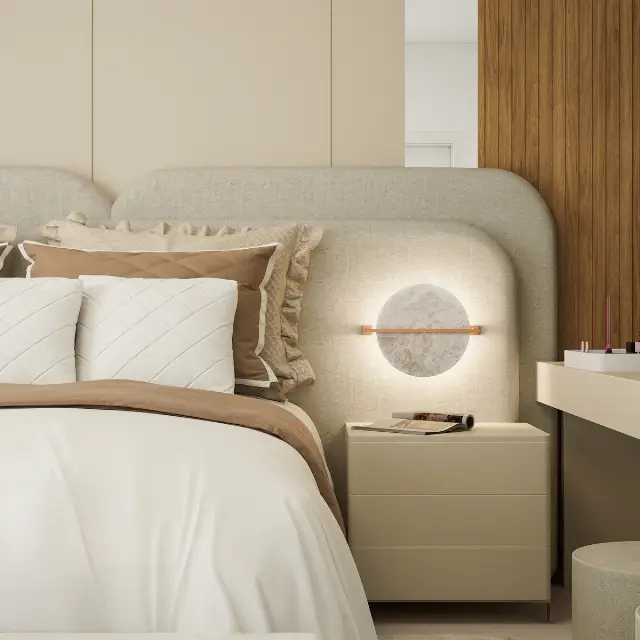
Timber on a bedroom wall spent about twenty years being a punchline. It meant a 1970s basement, orange varnish and a ceiling fan. Then it came back, and this time it came back in slats, in pale oak, in vertical lines behind a bed instead of across a whole room.
The reason is not purely fashion. A painted wall is a hard, flat plane that bounces both sound and light straight back at you. Timber does neither cleanly, and in the one room where you want things softened, that difference is felt rather than seen.
What it does to sound
A slatted wall with any depth to it breaks up reflections instead of returning them. That is why the look turns up in recording booths and lecture halls long before it reaches bedrooms.
In a bedroom the effect is modest and worth having. Voices sound less sharp. Footsteps on a hard floor stop ringing. None of this is soundproofing, and a wood walls bedroom treatment will not stop noise coming through from next door, so be clear about what you are buying.
What it does to light
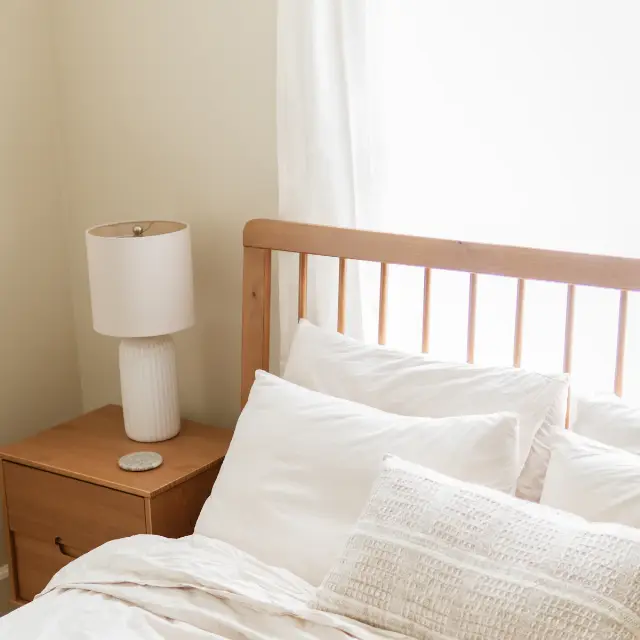
Grain catches light unevenly, which means a wood walls bedroom scheme changes through the day in a way paint does not. Morning light runs along the grain. Evening lamplight picks out the shadow lines between slats.
This is why the look reads as warm even in cool colours. The wall is never one flat tone, so the room never feels flat either.
The old mistake was covering four walls. One wall, usually the one behind the bed, is enough. Timber on every surface removes all contrast and the room closes in.
Getting wood panelling right
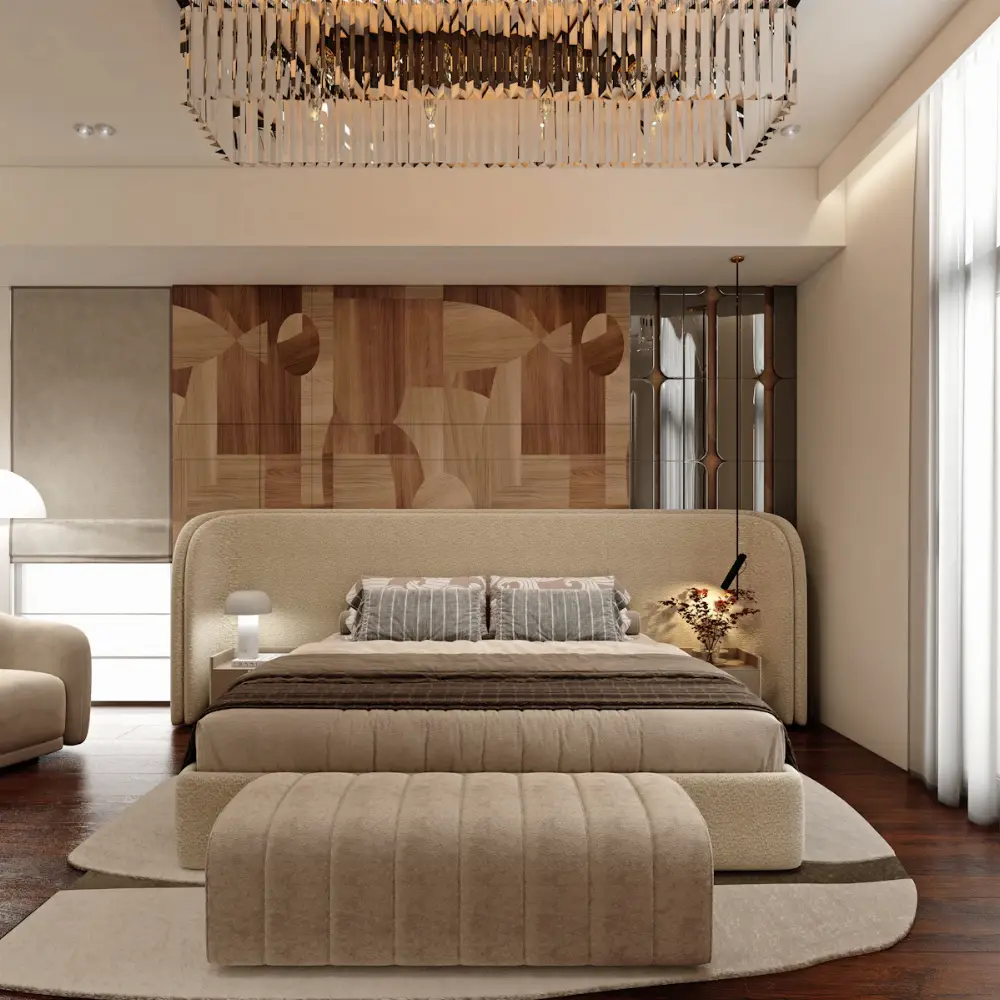
- Run the slats vertically behind a bed to lift a low ceiling, and horizontally only in a room that is already tall.
- Choose a matte or oiled finish over a gloss lacquer, since shine is what made the old version look cheap.
- Keep the timber tone away from the floor tone. Matching them turns the room into a box, while a clear gap in shade lets both read properly.
- Leave the other three walls plain and pale. Wood panelling needs somewhere quiet to sit against.
Who it suits
A wood walls bedroom works best in rooms that are too bright, too echoey or too plain, which covers most new-build bedrooms with hard floors and a single large window.
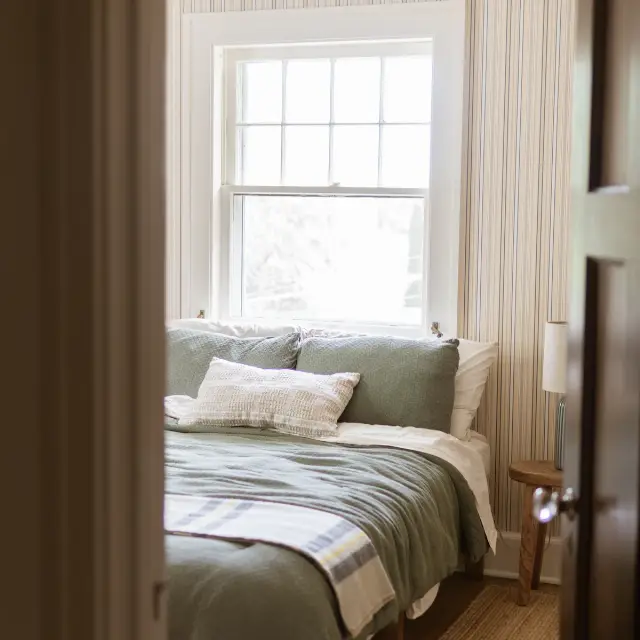
It works least well in a small room with low light already, where timber absorbs what little there is. In that case paint the wall and put the wood underfoot instead. The texture is still doing a job, just from a different direction.
An editorial piece on timber finishes and bedroom layout. Acoustic effects described here are general and modest, not a substitute for proper soundproofing. Check fire and building requirements before fixing timber to a wall.