A Headboard Worth Building a Bedroom Around
Get the headboard height, width and material right and the rest of the bedroom follows. The measurements that decide it.
An editorial piece on proportion and materials. Measurements given are general conventions rather than rules, and no specific product has been tested by us.
A bedroom is the one room where almost all the visual weight sits on a single wall. Everything else is low, soft and largely hidden under covers. So the piece behind the pillows is not an accessory. It is the architecture of the room, and most people buy it last and cheapest.
Get it right and you can leave the rest of the room nearly bare. That is the argument for spending on it.
Height is the decision
Work from the mattress rather than the floor. The top of a made bed usually sits somewhere around 24 to 26 inches up, and a headboard that clears it by less than about 10 inches disappears behind the pillows the moment the bed is dressed.
The useful range is roughly 14 to 30 inches of visible board above the mattress top, which puts the overall height somewhere between 38 and 56 inches from the floor. Taller suits high ceilings and reads as deliberate. Shorter suits a room with a window behind the bed or a sloping ceiling.
The common mistake is buying the standard size without measuring the pillow stack. Four pillows and a bolster will swallow ten inches of board without blinking.
Width changes the whole wall
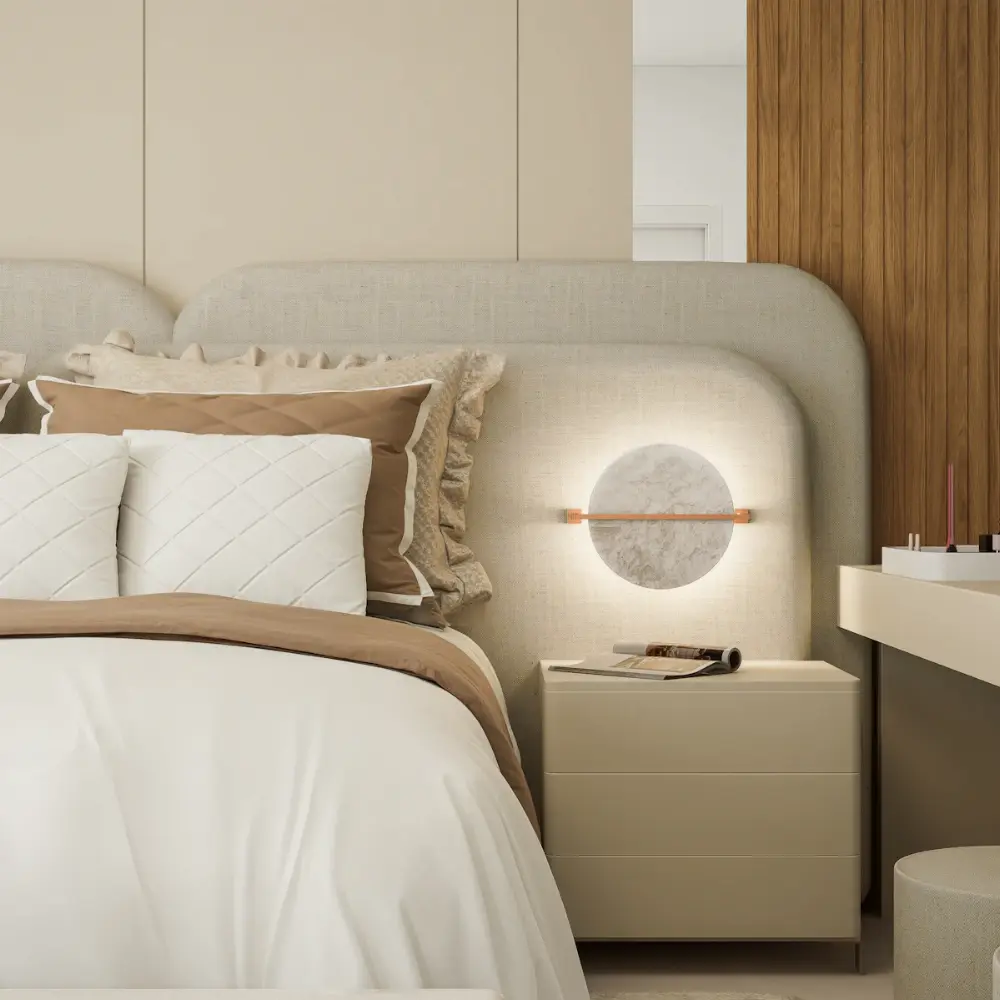
A headboard the exact width of the mattress is correct and unremarkable. One that runs wider, past the bedside tables on both sides, changes the room entirely because the wall now reads as a single composition rather than as a bed with furniture either side.
This is the cheapest way to make a modest bedroom feel designed. A board extending 12 to 18 inches past each side of the mattress, with the tables tucked in front of it, costs a little more in material and does more than any amount of styling.
If the board runs wide, keep the bedside lamps wall-mounted or hung rather than standing on the tables. A wide board with two tall table lamps in front of it gets busy quickly.
Material decides the sound of the room
- An upholstered headboard in linen or wool absorbs reflections and makes a hard-floored bedroom noticeably quieter to talk in.
- Timber reads warmer in photographs and colder in use, since nothing soft sits behind your head when you sit up to read.
- Cane or rattan is light visually and forgiving in a small room, but it offers no back support at all.
- Metal is the hardest to live with for anyone who reads in bed, and the easiest to keep clean, which is a real trade rather than a style question.
The practical case for upholstery
Most people sit up in bed for some part of the day. An upholstered headboard is the only version of this piece that supports that properly, which is why it keeps coming back regardless of what the rest of the room is doing.
The honest downside is cleaning. Fabric behind heads picks up hair oil over years, and a removable cover or a performance weave is worth specifying at the point of order rather than regretting later. Pale linen looks wonderful and shows everything.
Building the room around it
Once the board is the right height and wider than the bed, the rest of the room can be almost empty. Two low tables, one piece of art on a different wall, nothing above the bed at all.
That is the point of treating a headboard as the anchor. It gives the room its one strong line, and a bedroom with one strong line and nothing else competing is the closest thing to a restful room you can arrange on purpose.
An editorial piece on proportion, materials and layout. Heights and widths quoted are general design conventions and depend on your mattress, bedding and ceiling. Upholstery care varies by fabric, so confirm cleaning terms with the maker.