The Rattan Chairs We Keep Coming Back To
Rattan is a material and wicker is a weave. Knowing the difference is what stops a chair failing on a wet balcony.
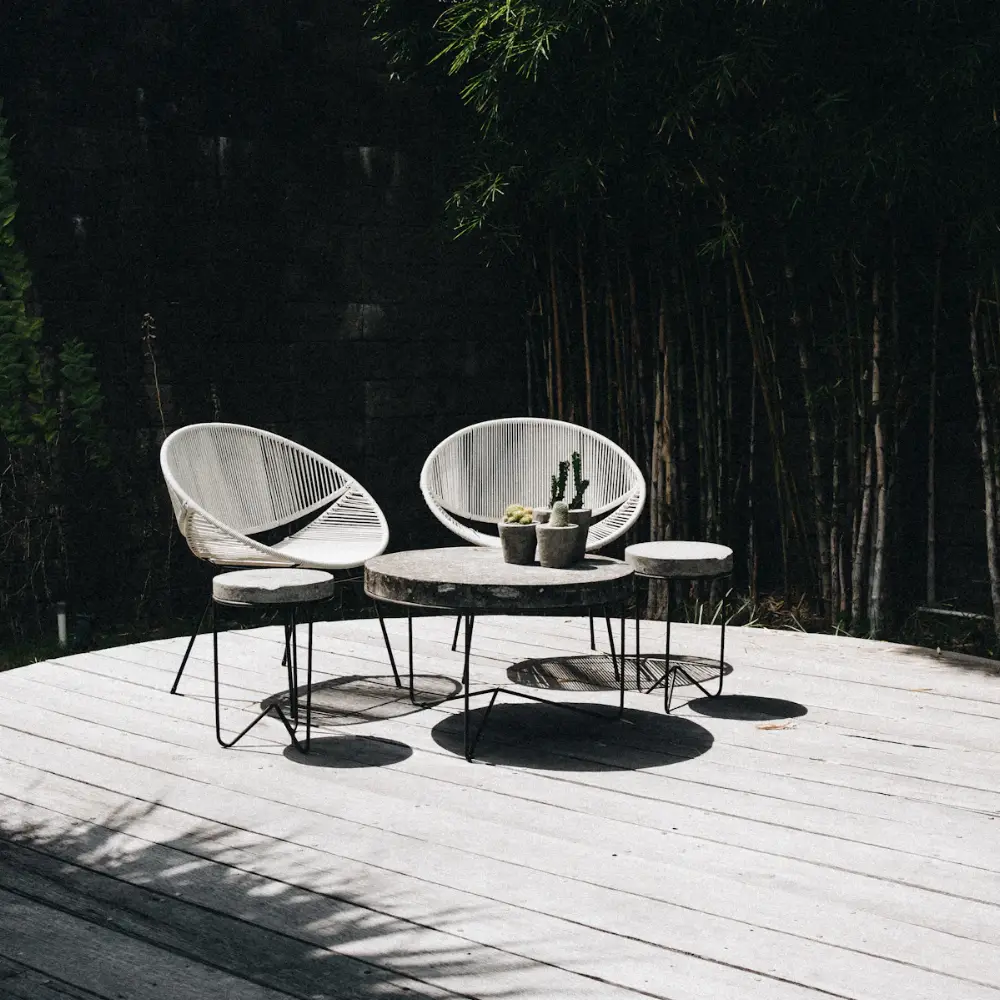
An editorial piece on materials and suitability, written as a preference rather than a test. We have not tested any specific chair, and construction quality varies widely between makers.
Rattan has been in and out of fashion three times in living memory, and it keeps returning for a plain reason. It is light enough to move with one hand, it is visually almost weightless in a small room, and it costs a fraction of upholstery.
What trips people up is the vocabulary, because the words are used interchangeably in listings and they do not mean the same things.
Rattan, wicker and cane are three different words
Rattan is a material. It is a climbing palm with a solid core, which is why a rattan frame can carry weight while weighing very little itself.
Wicker is not a material at all. It is a weaving technique, and it can be done in rattan, willow, reed, bamboo or plastic. So wicker furniture tells you how something was made and nothing about what it was made from, which is why the word turns up so often on synthetic garden sets.
Cane is the outer bark of the rattan palm, cut into strips. Cane furniture usually means woven panels set into a frame, as in the webbed backs on mid-century chairs, rather than a solid woven body.
If a listing says wicker and never names the material, assume synthetic or assume nothing. That is not a criticism of synthetic, which is genuinely better outdoors, but it is a different purchase at a different price.
Where natural rattan belongs
Indoors, a covered porch, a sunroom, a shaded balcony. Natural rattan does not like sustained rain or direct harsh sun. Water swells the fibres and repeated wetting and drying loosens the weave at the joints, while strong sun dries and embrittles it.
This is the single most common mistake with rattan chairs. They look like garden furniture and they photograph on terraces, but the natural version is really interior furniture that tolerates sheltered outdoor use.
What to check before buying
- Look at the joints rather than the weave. A frame held together with screws through rattan will loosen, while bound or doweled joints last.
- Press the seat. A natural rattan seat should flex slightly and spring back rather than creak, and creaking in the shop is a sign of what year two sounds like.
- Check the feet. Unprotected rattan feet on a hard floor fray, so look for capped or rubbered ends.
- Ask about the finish. An unsealed natural chair will lighten and dry, and a lacquered one will chip at the arms where hands rest.
Why they suit small rooms
The real argument for rattan chairs is visual. A woven back lets the wall show through, so the chair takes up floor without taking up sightline, which is the opposite of an upholstered armchair of the same footprint.
In a small living room or a bedroom corner, that transparency is worth more than comfort gained by bulk. Add one cushion rather than buying a bigger chair.
The honest limits
They are not long-sitting chairs. A woven seat with a thin cushion is fine for an hour with a coffee and tiring for an evening, so this is a second chair rather than a main one.
They also mark. Cane furniture dents where it is leaned on and the weave yellows unevenly with sun. For a piece at this price that ages into something softer, we count that as fair. For anyone who wants furniture to stay as bought, it is the wrong material entirely.
An editorial piece on material definitions and suitability. Rattan, wicker and cane definitions are standard industry terminology. Durability notes are general to natural rattan and vary by maker, finish and exposure. No product has been tested by us.