Brass Taps and Open Counters Done Right
Unlacquered brass taps change colour and lacquered ones wear through. Which to pick, and how open counters stay usable.
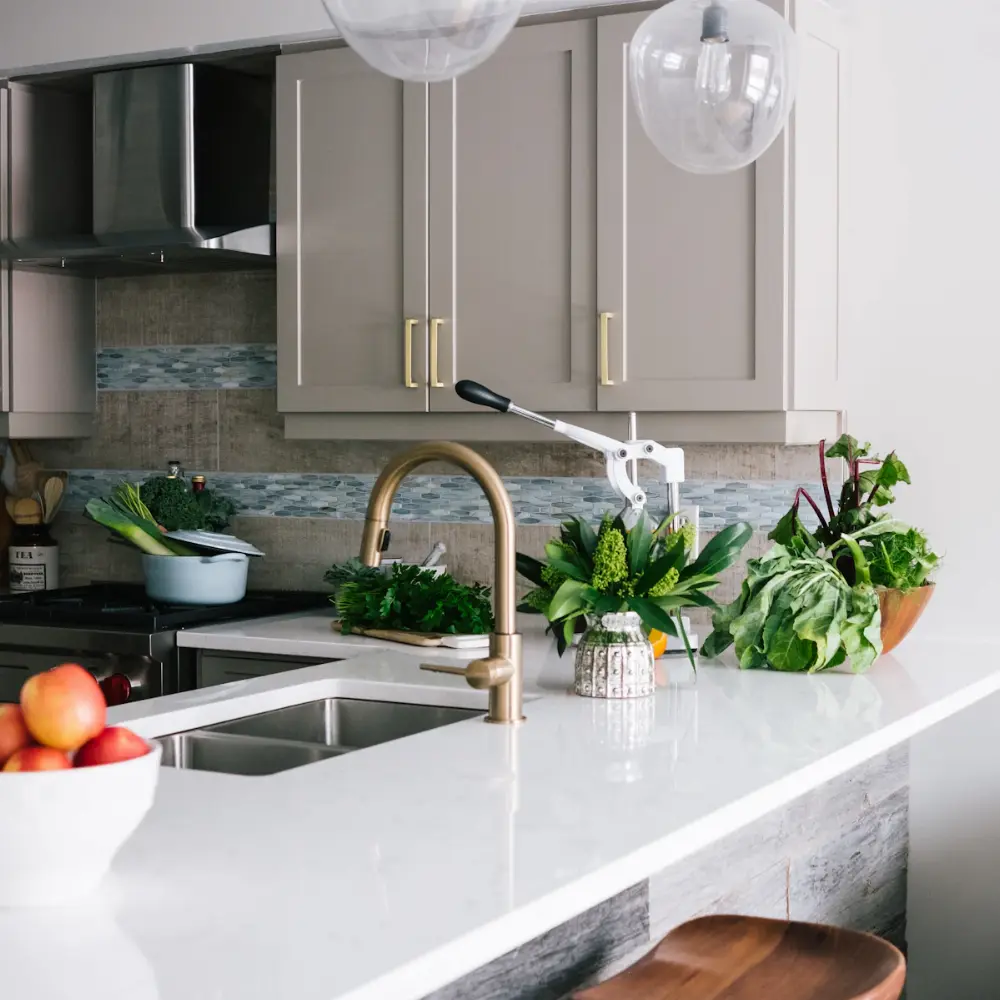
An editorial piece on finishes and layout. We have not tested any specific tap, and finish behaviour varies by manufacturer, so confirm the care terms with the supplier before buying.
Brass went from dated to desirable and then straight to default, which is usually the point at which people stop asking how a material behaves. A tap is not a cushion. It gets touched with wet hands twenty times a day for a decade, and the finish decides whether that looks like character or like neglect.
The choice that matters is not the shape. It is whether the brass is lacquered.
Unlacquered brass is a living finish
Raw brass oxidises. It darkens, it picks up fingerprints, it goes patchy around the handle where hands land, and over a few years it settles into a deeper uneven tone that most people either love or cannot tolerate.
Suppliers call this a living finish, which is an honest phrase doing gentle work. It means the product will not look like the photograph within about a month. If that is the appeal, unlacquered brass taps are the right buy and they age the way old ironmongery does.
If it is not the appeal, do not buy it hoping to polish it back. You can, with polish, repeatedly, forever. That is a weekly chore disguised as a design decision.
Lacquered brass has a different failure mode
A lacquered tap keeps its colour, because a clear coat sits over the metal. The problem is that the coat wears, and it does not wear evenly.
It goes first exactly where hands touch most, so you end up with bright worn patches on the handle and lever against an untouched body. That reads as damage rather than patina, which is the opposite of what unlacquered brass does, and it cannot be restored at home.
Neither is the wrong answer. Unlacquered goes uniformly darker and lacquered goes locally brighter. Pick the direction of change you would rather look at, because change is not optional with brass taps.
The finish next to it decides everything
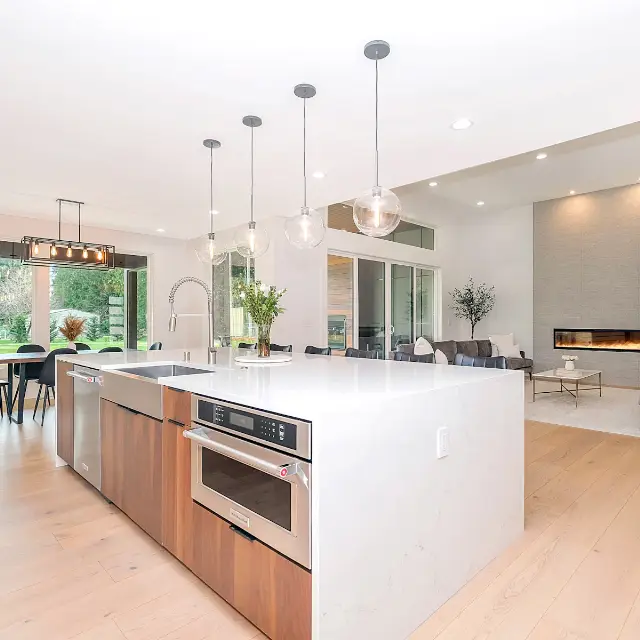
Brass near stainless steel appliances almost always looks accidental, since the two have different undertones and the eye reads the warmer one as a mistake. Brass near timber, unglazed clay, limestone or painted joinery looks intentional.
If the kitchen has a stainless sink, a brass tap above it will fight. Either change the sink to fireclay or stone, or pick a finish closer to the sink and put the brass somewhere it stands alone, such as handles or a light.
Open counters, honestly
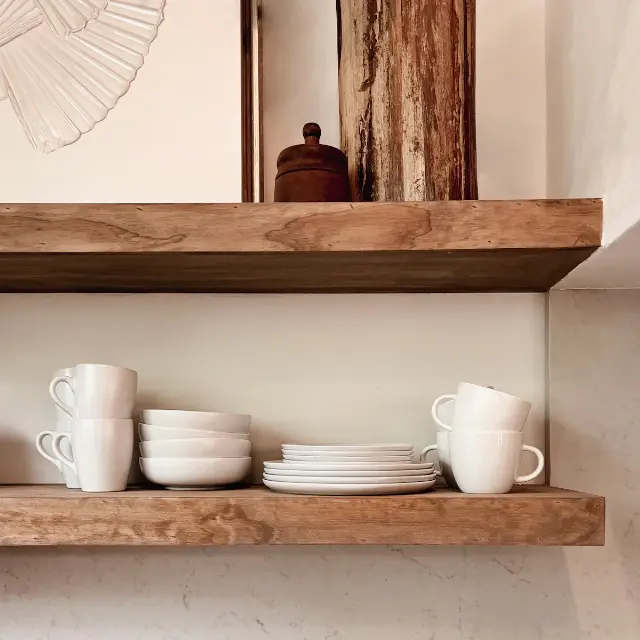
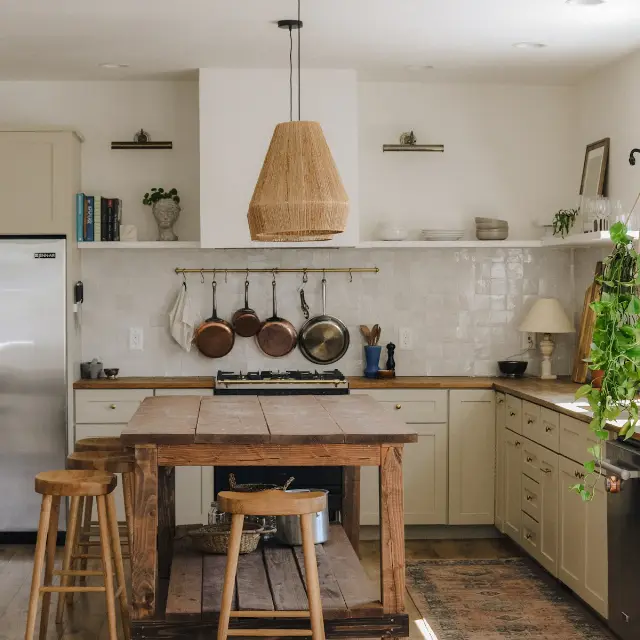
Open shelving and clear worktops photograph beautifully and work only under one condition, which is that everything on display is in daily use.
- Keep one appliance out, not three. The kettle or the coffee machine earns its place, and the blender used twice a month does not.
- Store in sets of the same thing. Six matching glasses on a shelf read as order, and six different ones read as the back of a cupboard.
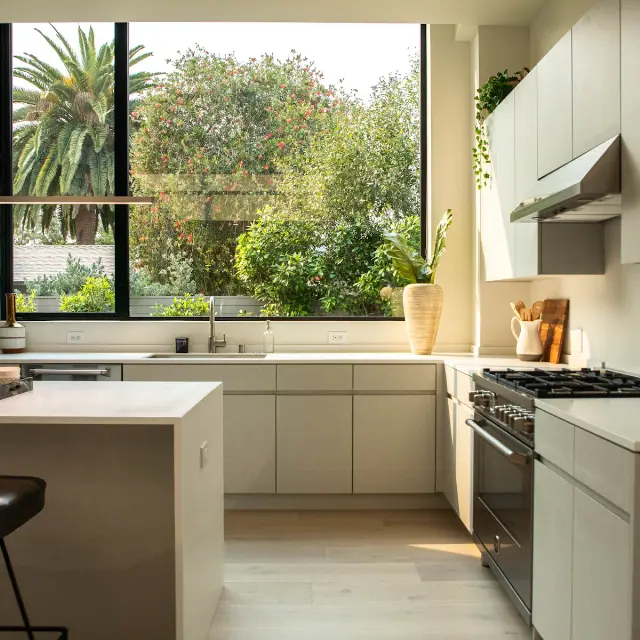
- Leave a continuous metre of counter completely clear and treat it as non-negotiable, since a kitchen without one working bare stretch is unusable regardless of how it looks.
- Accept the dust. Open shelves above a hob collect a fine grease film within weeks, so anything stored there needs to be washed rather than admired.
What we would do
Unlacquered brass taps in a kitchen with timber and stone, and a willingness to let them go dark. Lacquered only if somebody in the house genuinely wants the colour to stay put and understands the worn-patch outcome in year four.
And open counters limited to one shelf rather than a whole wall. A single shelf of things you use daily is a kitchen that looks lived in. A wall of them is a kitchen you are maintaining for photographs.
An editorial piece on finish behaviour and kitchen layout. Patina, wear and care characteristics described here are general to brass finishes and vary by manufacturer and water conditions. No specific product has been tested by us.