Open Shelves That Stay Calm and Useful
Open shelves work when everything on them is used daily. The three rules that keep them calm instead of cluttered.
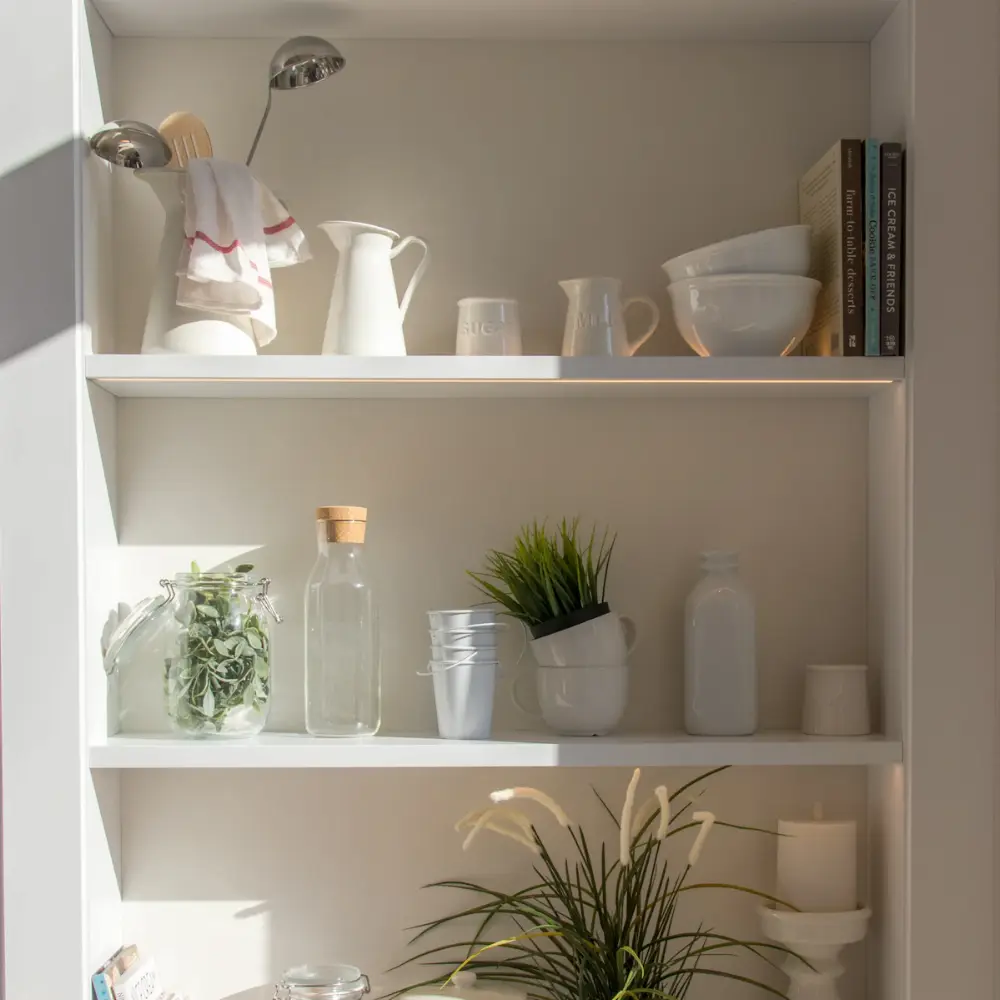
An editorial piece on arrangement and practicality. Fixings and load capacity depend on your wall construction and should be confirmed with the bracket maker or a qualified installer.
Open shelves look effortless in photographs and are the hardest storage in a house to keep looking that way. A cupboard forgives anything, because the door closes. A shelf is a permanent exhibition of your decisions.
They are still worth having. They just need rules, and the rules are fewer than people expect.
Rule one: daily use only
The single test that decides whether open shelves succeed is whether the things on them get picked up most days.
Items in daily rotation stay clean, get moved around, and look like they belong. Items stored for occasional use sit there collecting dust and become a chore. So the serving platter used twice a year goes in a cupboard, and the six glasses everyone drinks from go on the shelf.
This also solves the dust question without any effort. Things that are washed every day cannot accumulate anything.
Rule two: sets, not singles
A shelf of six matching glasses reads as calm. A shelf of six different glasses reads as the back of a cupboard, even if each one is more beautiful than the matching ones.
Repetition is what the eye reads as order. This is why restaurant shelving looks tidy in photographs while it holds far more than any domestic shelf, because everything on it is in multiples.
The practical version for most homes is to keep plates in one stack, bowls in another and glasses in a row, with no more than three or four categories visible in total. Beyond that it becomes a display of inventory.
Rule three: leave a gap
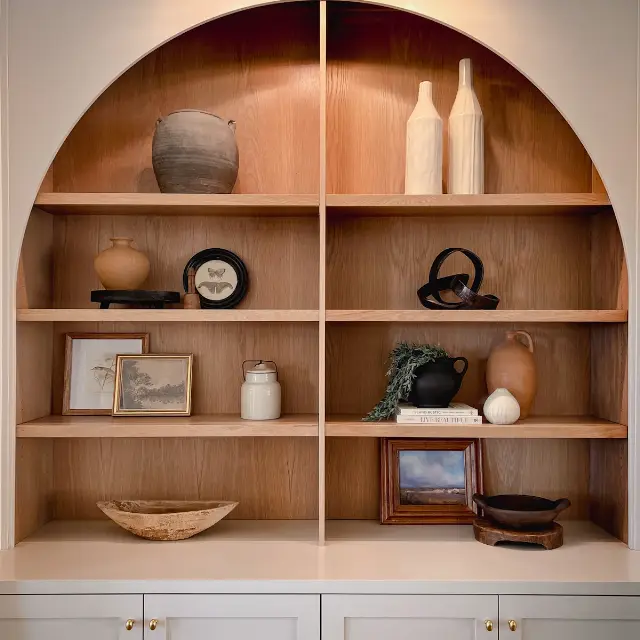
- Leave roughly a fifth of each shelf empty, since a full shelf reads as storage and a slightly empty one reads as a choice.
- Keep the bottom shelf highest in traffic and the top shelf for the lightest, least-used things, which is also the safer arrangement.
- Allow a hand's width of clear height above the tallest item, as items wedged tight under the next shelf are both awkward to lift out and visually cramped.
- Resist filling a new shelf for the first fortnight. Whatever has not been needed in two weeks probably does not belong on it.
The honest truth about an open shelving kitchen
Above a hob, open shelves collect a fine film of cooking grease within weeks. It is not visible at first and then everything feels faintly tacky.
That is not an argument against the idea. It is an argument for putting them away from the cooking zone, or accepting that whatever sits there gets washed rather than dusted. An open shelving kitchen with everything in daily use handles this automatically, which brings it back to rule one.
What to put on them
Working objects photograph better than decorative ones, which is counterintuitive and consistently true. A stack of plates, a row of glasses, a wooden board, a jar of utensils. All of it earns its place by being needed.
What fails is the styling kit. Three cookbooks nobody opens, a small plant in a pot with no drainage, a decorative bowl holding nothing. They are the objects that make open shelves feel staged, and staged is the one thing a shelf of everyday things never looks.
An editorial piece on arrangement and practicality. Shelf fixings, bracket spacing and load limits depend on wall construction and product, and should be confirmed with the manufacturer or a qualified installer before loading any shelf.