Frames and Small Objects for Quiet Corners
Picture frames work in odd numbers, at eye level, with wide mounts. The rules that keep a small corner from looking busy.
An editorial piece on proportion and arrangement. Measurements given are general design conventions rather than rules. Nothing here has been tested by us.
Small objects are where good rooms go wrong. The furniture is right, the colours are right, and then there are nine picture frames and trinkets on a surface and the room feels restless without anybody being able to say why.
The fix is not minimalism. It is that small things need the same proportion decisions as large ones, and they almost never get them because they are cheap and easy to move.
The mount does the work
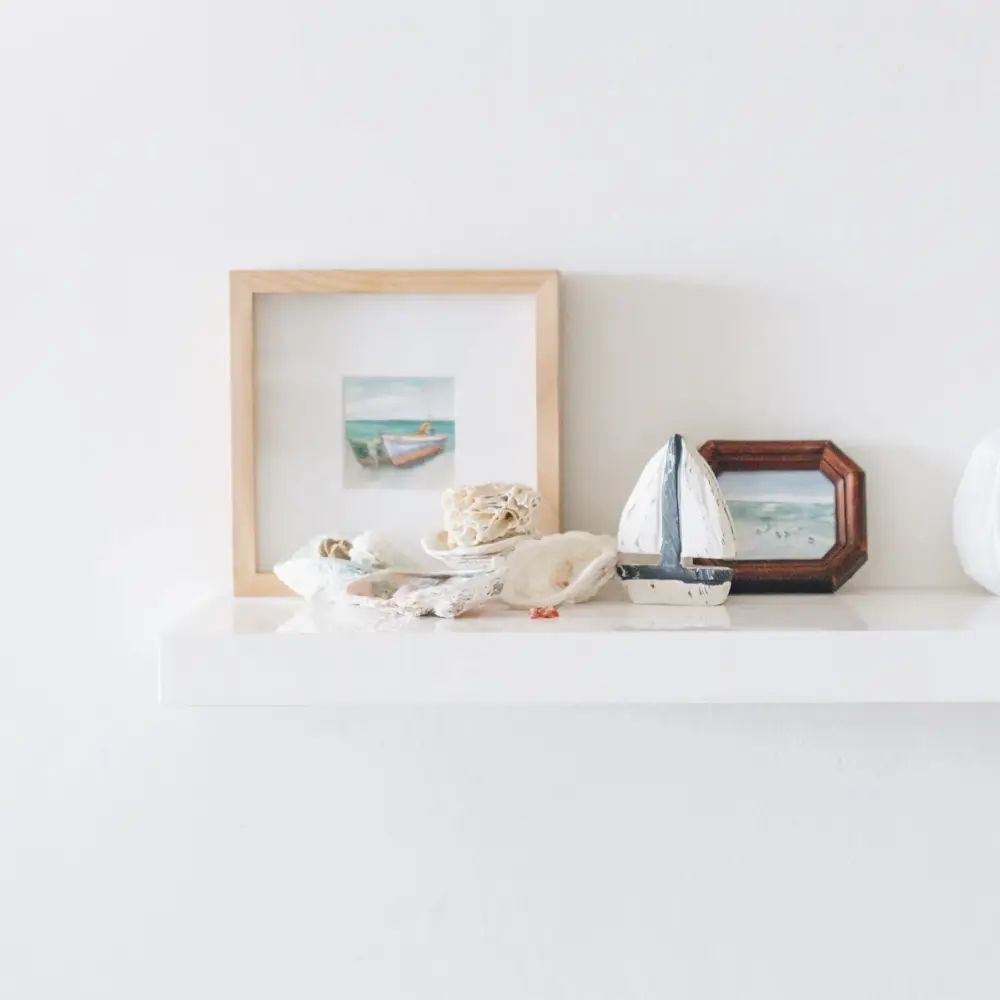
The most common mistake with picture frames is a small image in a tight frame. A postcard in a postcard-sized frame reads as a postcard, and ten of them read as a noticeboard.
Give a small image a generous mount, which means a wide border of plain card around it, and the same picture becomes a piece. A 5 by 7 inch photograph in a 12 by 16 inch frame with a wide white mount has presence that the same photo in an 8 by 10 does not. This is the cheapest upgrade available in any room.
Keep the mount wider at the bottom than the top by a small margin, which is a traditional framing convention and stops the image looking as though it is sliding down inside the frame.
Height, and the eye-level rule
Hang so the centre of the picture sits around 57 to 60 inches from the floor, which is roughly average standing eye level and the convention most galleries use.
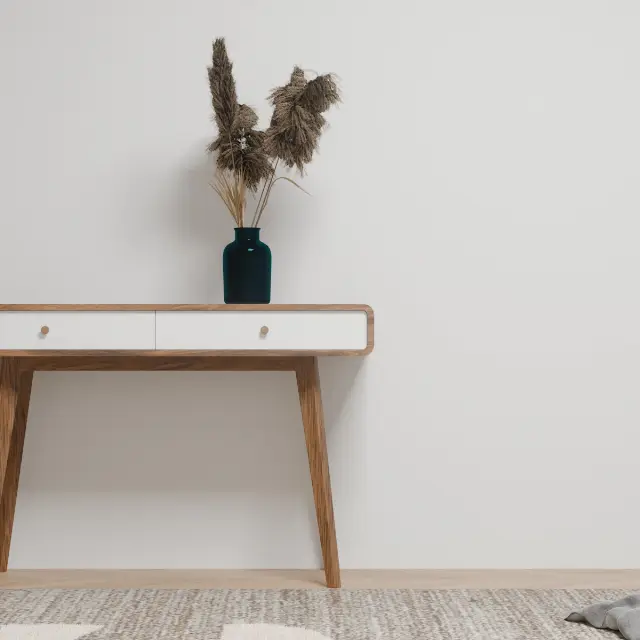
The exception is anything above furniture, where the relationship to the piece below matters more than the floor. Six to ten inches above a console or a mantel will always look better than a frame correctly centred on the wall and floating two feet above the shelf.
Groups work in odd numbers
- Three or five objects, not two or four, because even numbers invite the eye to pair them and pairing reads as formal.
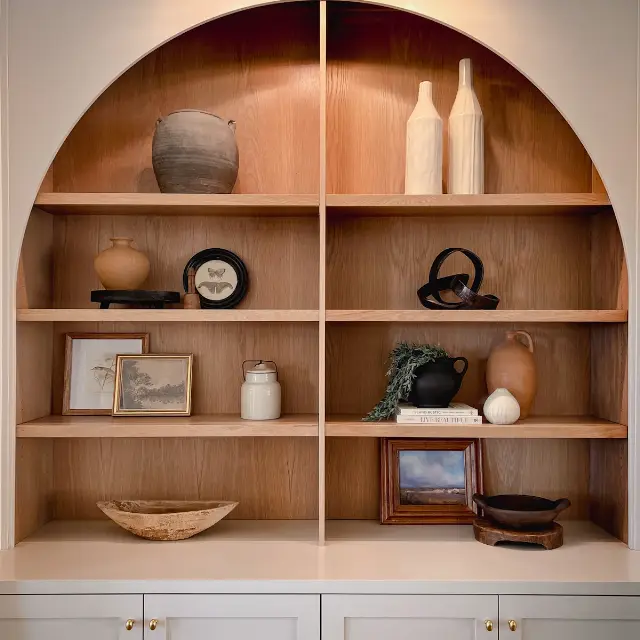
- Vary the height clearly rather than slightly. Three objects of nearly the same height look like a mistake, while a tall, a medium and a low read as a group.
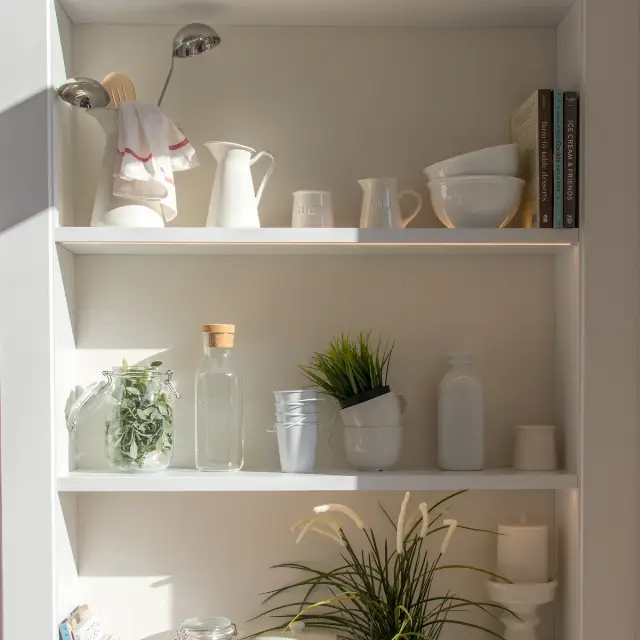
- Keep the materials to two or three. A group of brass, clay and wood is a composition, and a group of brass, clay, wood, glass, chrome and plastic is a shelf.
- Overlap something. One frame leaning in front of another instantly makes an arrangement look assembled by a person rather than positioned by a plan.
Styling small objects without crowding
The useful habit is grouping rather than spreading. Five objects clustered in one half of a surface read as one thing, while the same five spaced evenly along it read as five things and the surface disappears underneath them.
A tray helps more than it should. Putting three small objects on a tray gives them a visible edge, and anything with an edge around it stops competing with the rest of the room.
What quiet corners actually need
Very little. A chair, a surface, one lamp, and then either one frame or a group of three. That is a corner, and anything beyond it is decoration of decoration.
The test for styling small objects anywhere is whether you could pick up every item on the surface in two hands. If it takes three trips to clear it, the corner is not quiet, and no amount of good taste in picture frames will make it so.
An editorial piece on framing, hanging heights and arrangement. The 57 to 60 inch centre height, mount proportions and odd-number grouping are long-standing design and gallery conventions rather than measured findings, and the right numbers depend on your ceiling, your furniture and who is looking.