Making a Formal Fireplace Feel Lived-In
A formal fireplace reads cold when everything on it is symmetrical. Break the symmetry, lower the art, and let it be used.
An editorial piece on arrangement. Anything involving a working fire, a flue or a hearth should be checked with a qualified installer, and we give no safety guidance here.
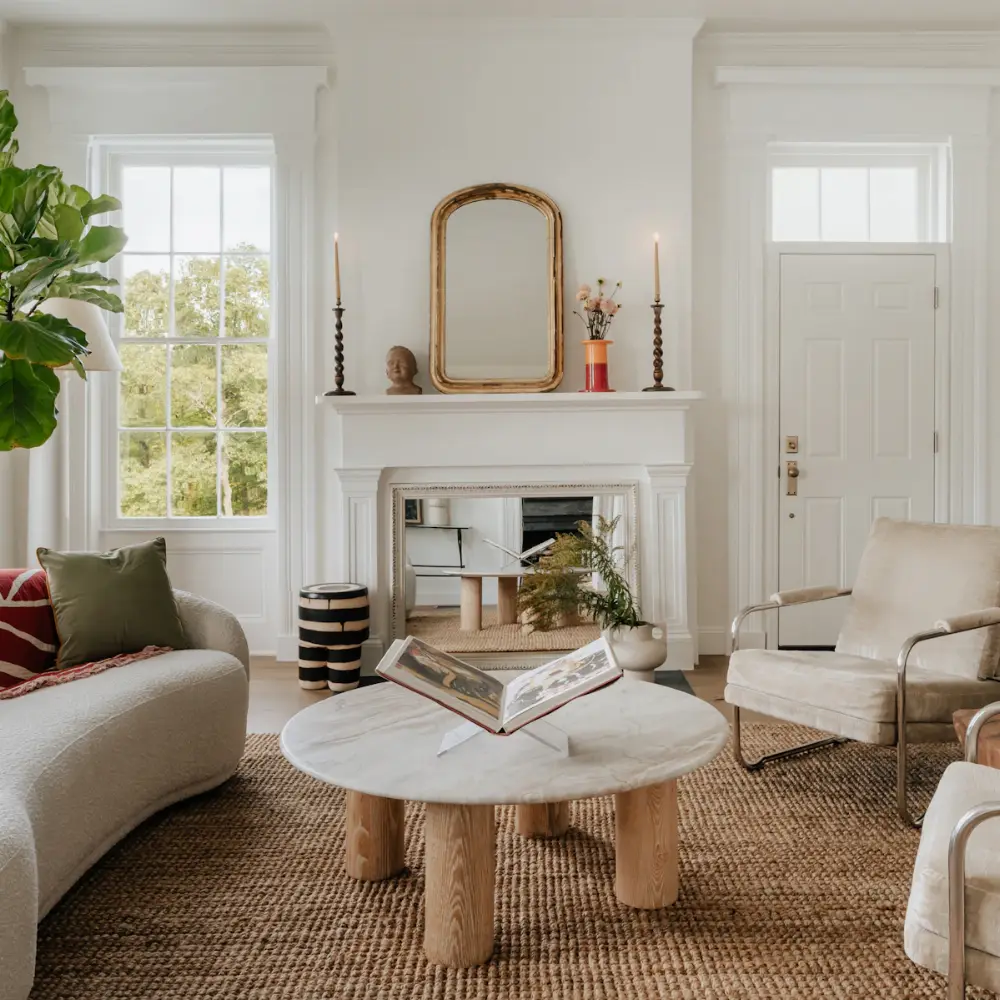
A grand fireplace is the one architectural feature that can make a room feel like a hotel lobby. Carved stone, a deep mantel, a big mirror above it, two matching lamps at either end. Technically correct and strangely unwelcoming.
The problem is not the fireplace. It is that formality invites symmetry, and perfect symmetry reads as untouched. A room looks lived in when something in it is slightly off centre, and a mantel is the easiest place to start.
Break the pair
The default fireplace mantel styling is a matched pair at each end and something centred above. It is the arrangement every showroom uses because it photographs cleanly and requires no judgement.
Take one of the pair away. Put the remaining lamp or vase at one end, then group two or three smaller things loosely toward the other, leaving the centre lighter rather than heavier. The eye now travels along the mantel instead of bouncing off the middle.
This single change does more for a formal fireplace than any amount of new accessories, and it costs nothing but the willingness to store something.
Lower whatever hangs above
Art and mirrors over a mantel are routinely hung too high, usually because somebody centred them on the chimney breast rather than relating them to the shelf.
Bring it down so there is roughly six to ten inches between the mantel and the bottom of the frame. The two then read as one unit instead of as a shelf and a separate picture floating above it. In a tall room this feels wrong for about a day and right thereafter.
Leaning a framed piece on the mantel rather than hanging it is the fastest way to soften a formal fireplace, and it lets you overlap it slightly with something else, which hanging never allows.
Let the hearth be used
A pristine empty hearth is the clearest signal that a fireplace is decorative. Whether or not you light it, the floor in front of it should look like somebody intends to.
- A stack of logs in a basket, which works whether the fire is real or sealed, because the texture does the job on its own.
- One tool or a brush left against the surround rather than a full matching set of five on a stand.
- A rug that runs up to the hearth rather than stopping politely short of it.
- A low stool or a floor cushion at an angle nearby, so the space in front reads as a place to sit rather than a clearance zone.
Scale down the materials, not the fireplace
If the surround is stone or heavily moulded, the instinct is to match its weight with equally grand objects. The opposite works better. Put plain, soft, slightly humble things against it, since linen, unglazed clay and old wood make carved stone look like architecture rather than like a statement.
Shiny metal and glass do the reverse. They reflect the formality straight back and the whole wall goes cold again.
The test
Stand in the doorway and look for one thing on the mantel that somebody clearly put down rather than placed. A book face down, a card still propped up from a birthday, a bowl of keys.
If every object on the shelf was positioned, the room will stay formal no matter how good the fireplace mantel styling is. One honest object is the whole difference, and it is usually already in the house.
An editorial piece on arrangement and proportion. Spacing figures are general conventions. Anything to do with a working fire, flue, hearth clearance or combustible materials near a fireplace should be confirmed with a qualified professional and your local regulations.