The Best Reading Corner Is Smaller Than You Think
A reading corner needs about 12 square feet, one chair, one light and a table at arm height. Everything else gets in the way.
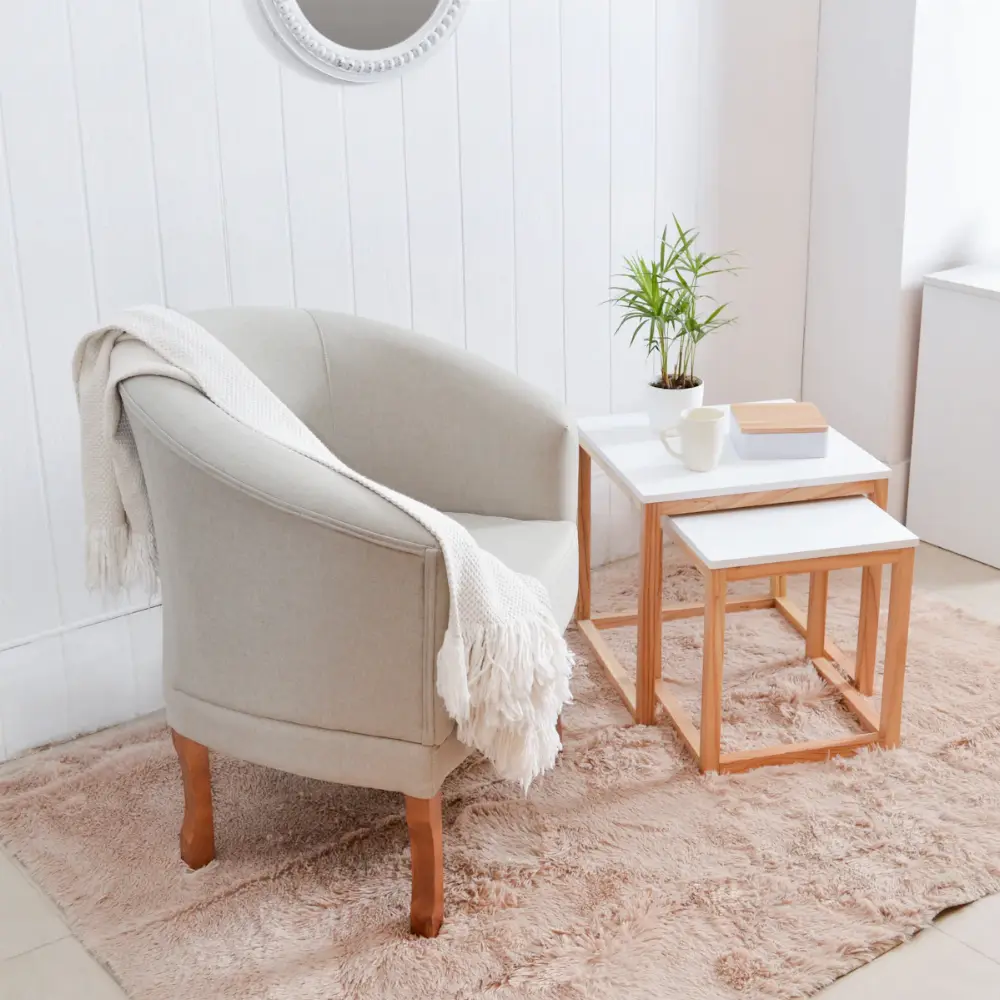
An editorial piece on proportion and lighting. Nothing here has been tested by us, and the measurements are general conventions rather than rules.
People plan a reading corner as though they were building a library. A deep armchair, an ottoman, a floor lamp, a side table, a basket of blankets, a shelf of books within reach. Then they sit in it twice.
The corners that actually get used are nearly always accidental and nearly always tiny. A chair by a window. A lamp behind one shoulder. Nothing else in arm's reach except somewhere to put a cup down.
The footprint is about 12 square feet
Work it out rather than guessing. A reasonable armchair is about 30 to 32 inches wide and 32 inches deep. Add a small table of 16 inches and leave 12 inches of standing room to get into the chair, and the whole arrangement lands inside a rectangle of roughly 48 by 36 inches.
That is 12 square feet. It fits at the end of a bedroom, on a landing, in the dead corner of a living room nobody walks through, or in the bay of a window that is currently holding a dying plant and a phone charger.
Anything bigger stops being a corner and starts being a second seating area, which is a different thing with a different purpose. A second seating area competes with the sofa. A corner does not.
Three things, and the light comes first
The single reason most reading nook attempts fail is light from the wrong place. A ceiling light puts the glare on the page and your own shadow across it. The fix is a light behind and slightly to one side of the shoulder, with the bulb above eye level when seated so you never see the filament.
Warm is fine for atmosphere and slightly cooler is better for long reading, but the position matters more than the temperature. A cheap lamp in the right spot beats an expensive one in the wrong one.
Put the switch where your hand already is. A lamp you have to stand up to turn off will eventually be left on or left off, and either way the corner stops being used in the evening.
What to leave out of a reading nook
- The ottoman, unless the chair is upright enough to need one. In a deep chair it mostly becomes a shin obstacle.
- The blanket basket, which holds three blankets and gets used for one.
- The bookshelf, because a shelf of books beside a chair is a to-do list and a corner should not contain a to-do list.
- A second chair. Two chairs make a conversation spot, and nobody reads in a conversation spot.
The table is the part worth measuring
Get the table level with the chair arm, which usually means somewhere around 24 to 26 inches high rather than the 18 inches a coffee table gives you. Reaching down for a hot drink while holding an open book is how both end up on the floor.
Small is fine. A surface wide enough for a mug, a book face down and a pair of glasses is the full specification. Anything larger fills up with post.
Why smaller works
A reading corner succeeds when sitting in it requires no setup. One chair, one light within reach, one surface at the right height, and no decision to make on the way in.
Every extra object adds a small act of tidying before the corner can be used, and a reading corner with a tidying tax attached is a corner you will walk past. Twelve square feet, three things, and a lamp in the right place will get more reading done than a room designed for it.
An editorial piece on proportion, lighting position and furniture height. Measurements given are general design conventions and depend on your chair, your window and your eyesight.