Inside a Warm Kitchen With a Rustic Heart
A rustic kitchen is built from materials that age well, not from props. Here is what actually makes one feel warm.
This is an editorial piece on materials and layout rather than a product review. No product here has been tested by us.
The word rustic has been doing a lot of heavy lifting in kitchen photography, and most of what it is used to sell is costume. Shiplap over plasterboard. A fake beam glued to a flat ceiling. Open shelves holding nine identical bowls nobody eats from.
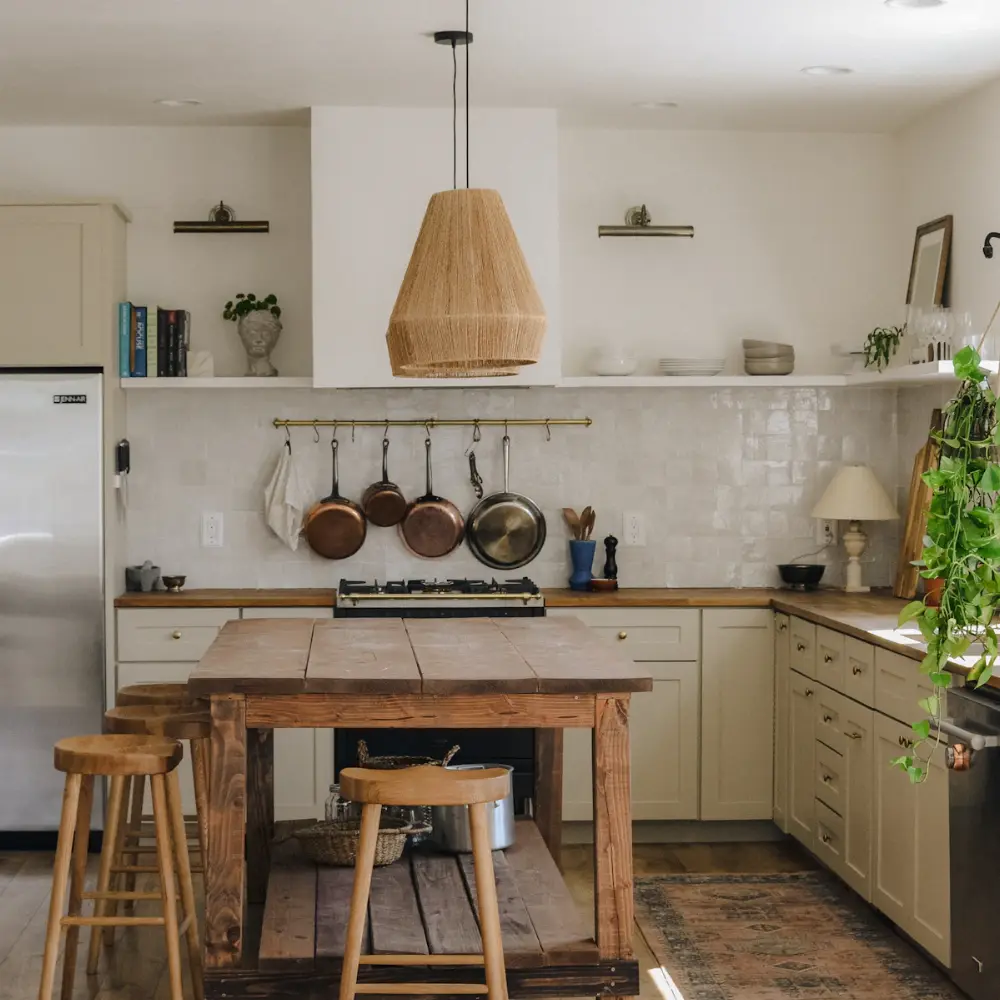
A rustic kitchen with a genuine heart is a plainer thing. It is a room where the materials were chosen because they get better with use, and where almost nothing in it is afraid of being touched.
Start with surfaces that take a mark
The single decision that makes or breaks a rustic kitchen is the worktop. Anything that shows every ring and crumb forces you to keep the room pristine, and a kitchen kept pristine never feels warm.
Timber is the obvious choice because it dents and darkens and reads as history rather than damage. Unpolished stone does the same thing more slowly. High-gloss anything does the opposite, since a scratch on a mirror finish looks like a fault, while a scratch on oak looks like Tuesday.
One thing with weight
Warm rooms almost always have an anchor, and in a kitchen it is usually something heavy that does not move. A butcher's block. A deep single sink. A cast iron pan that lives on the hob instead of in a cupboard.
These matter out of proportion to their cost. A $25 skillet sitting out does more for the character of a room than an expensive splashback, because it says the kitchen is used rather than staged.
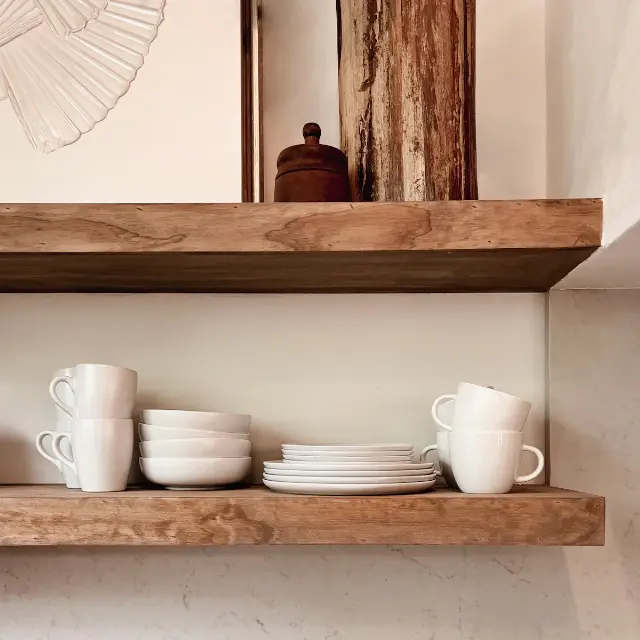
Open shelving only works if what sits on it is in daily rotation. Shelves of decorative crockery turn into dusting, and dusting turns into resentment.
Warm kitchen ideas that are mostly about light
- Put a lamp on the worktop. Not a spotlight, an actual table lamp, because overhead downlights after dark are what make a kitchen feel like a corridor.
- Use warmer bulbs than you think you need, somewhere around 2700K, and dim the ceiling rather than brightening it.
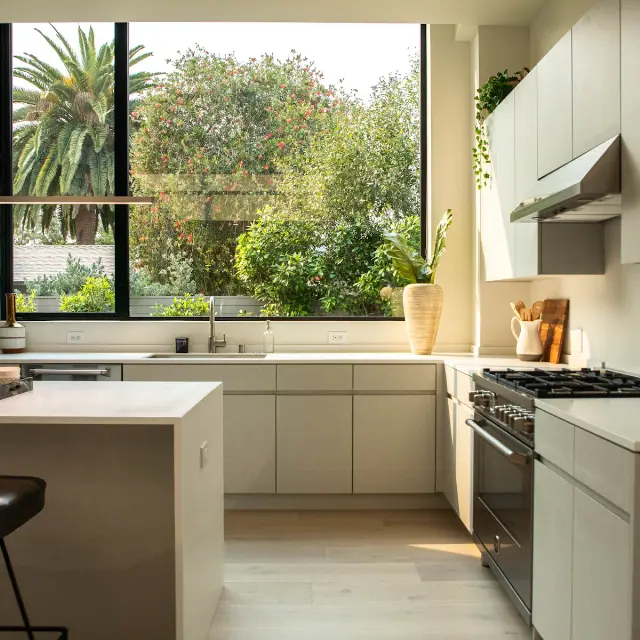
- Leave one window unobstructed completely, even if that means giving up a run of wall cupboards.
- Let the floor be darker than the walls, which grounds the room and keeps the eye at the level where the cooking happens.
What to leave out
Most warm kitchen ideas fail by addition. A rustic kitchen does not need a chalkboard, a sign about wine, or a basket of ornamental lemons.
What it needs is wood that will darken, a pan that will blacken, linen that will soften and a bulb low enough in temperature to make all three look like they belong together. Everything else is set dressing, and set dressing is the thing you get bored of first.
An editorial piece on materials, layout and lighting. Colour temperature and material behaviour described here are general design guidance rather than tested claims.